
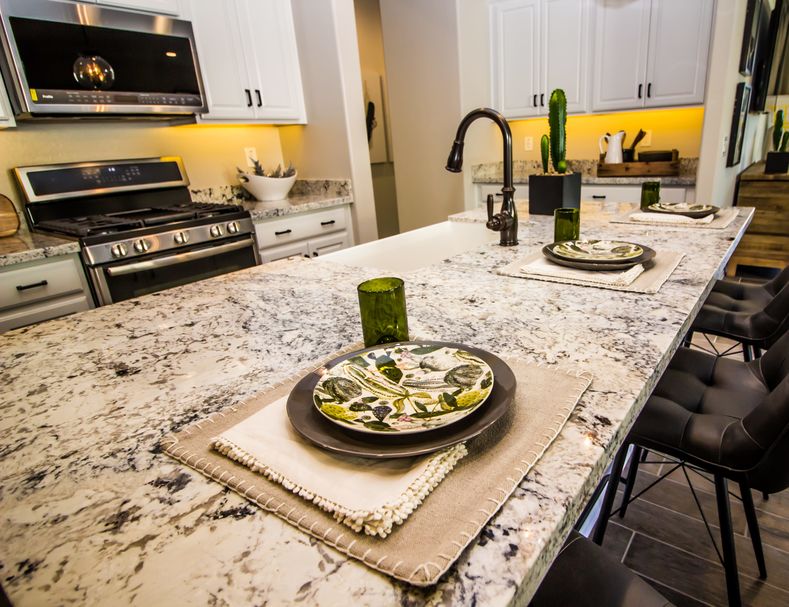
When you decide that your kitchen needs a remodel, you’ve only taken the first step. Your aesthetic preferences may be just as important to you as the practical concerns, and the two often go hand in hand when it comes time to choose your kitchen countertops. There are also economic factors to consider.
Appearance, durability, and price differ from material to material, and it can seem daunting to choose which deserves priority in any kitchen remodeling project.
Quartz is Beautiful and Easy to Clean
Quartz is a non-porous and incredibly durable material, which means it’s resistant to many of the typical messes and wear-and-tear that your kitchen will endure on a yearly basis. Spilled juice, sauce, and soda won’t leave permanent stains, and bacteria will have a hard time burying itself deep in the surface where you’ll be hard-pressed to reach it.
Errant knives, tenderizers, and dropped pots and pans are less likely to leave damage than they would be if you selected laminate or marble. With a quartz countertop, you’re getting an elegant look that will last a long time, and though it’s more expensive than some of the alternatives, you’ll get more for your money.
Granite is Durable and Can Take the Heat
One of your key considerations when remodeling your kitchen should be the heat. This is much less of a factor when you’re remodeling a bathroom or living room, which is why you can’t always apply the same design principles across different rooms, even as you try to maintain some aesthetic consistency throughout the house.
Granite countertops are a great option for resisting heat, whereas lesser countertop materials will suffer gradual damage from years of proximity to a hot oven. It’s also quite tough, so scratches are unlikely. The weakness of granite is that it’s more porous than some of the other materials you’ll find on the market, so your countertop may require perioding sealing to ward off bacteria and stains.
Laminate Combines Affordability and Ease of Maintenance
Many homeowners choose laminate for their countertops. Laminate is a low-cost option that can mimic the look of stronger materials in the interest of keeping your interior design consistent. It’s also relatively easy to clean, and if it’s well-maintained, it will have a reasonable lifespan and remain aesthetically pleasing for a good while.
Maintenance is the key, however. Laminate countertops offer less heat resistance than natural stone alternatives, and you’ll also need to keep an eye on water damage. The non-porous surface will protect it from deep stains and bacteria, but you’ll want to avoid scratches, which can damage it easily. All this means good upkeep is essential if you don’t want to pay the costs to replace it. Laminate is an affordable option, but the low cost and ease of maintenance come with trade-offs.
Marble Offers Elegance, At a Cost
Homeowners who prize a certain interior design theme emphasizing polish and uniqueness sometimes choose marble for their countertops. Because of its natural beauty and its resistance to heat, marble is an attractive option if you have the means and are pursuing a certain look.
Despite its appeal, however, marble’s susceptibility to damage and its highly porous surface necessitate periodic sealing and gentle cleaning if you want to prevent stains and scratches. Spills, dropped utensils, and other common kitchen accidents will leave a mark that a stronger and more affordable option would shrug off. For this reason, marble is a long-term investment.
When you want to remodel your kitchen with a new set of countertops, call us at 610-692-7188 to schedule a consultation. We work with homeowners throughout West Chester, PA, and will walk you through your options, weigh the pros and cons, and provide recommendations based on your unique needs.
Leave a Reply