
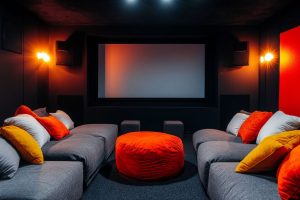
Creating a basement home theater is one of the most exciting upgrades you can make to your West Chester home. It is the perfect way to turn unused square footage into a space your family and friends will use. But a true theater experience does not happen by accident. It takes planning, the right materials, and careful attention to detail long before the first movie ever plays.
Here is what really matters when designing a basement home theater the right way.
Soundproofing That Keeps the Noise Contained
One of the biggest mistakes homeowners make is underestimating sound travel. Even though basements are partially below ground, low frequencies and bass can easily move through framing and into the rest of the house.
To prevent this, sound control needs to be built into the structure. Insulation inside walls and ceiling cavities help absorb sound. Isolation clips or resilient channel systems reduce vibration transfer. Solid core doors and tight seals also make a noticeable difference. Addressing soundproofing during construction ensures your theater stays immersive without disrupting bedrooms or living spaces upstairs.
Lighting Control for a True Theater Feel
Lighting should enhance the movie experience, not compete with it. Bright overhead fixtures with no dimming option can wash out the screen and ruin contrast.
A well-designed basement theater uses layered lighting. Recessed lights on dimmers provide general illumination when needed. Wall sconces add warmth and ambiance. Low level floor or step lights improve safety without distracting from the screen. If your basement includes egress windows, blackout shades are often necessary for daytime viewing.
With the right setup, you can transition from full lighting to movie mode with ease.
Smart Wiring and Equipment Planning
A clean, professional look depends on what happens behind the walls. Speaker placement, HDMI runs, power outlets, and internet connections should all be planned before drywall installation.
Many homeowners choose built in cabinetry or a small equipment closet to house receivers and streaming devices. Proper ventilation is important to prevent overheating. It is also wise to plan by installing conduits that allow cables to be upgraded later without opening finished walls.
Thoughtful wiring design keeps everything organized and avoids the clutter of visible cords.
Ceiling Treatments That Improve Acoustics
Ceilings play a bigger role in sound quality than many people realize. Flat drywall can create echoes and unwanted sound reflections.
Acoustic panels, tray ceilings, or coffered designs can improve sound clarity while adding visual interest. In some cases, a drop ceiling with acoustic tiles makes sense, especially when access to plumbing or wiring is needed. The goal is to balance performance, appearance, and practicality.
Comfort That Completes the Experience
A great home theater invites you to stay awhile. Comfortable seating, proper spacing between rows, and good airflow all contribute to the experience. Carpet or sound absorbing flooring materials reduce echo and add warmth underfoot.
When layout, lighting, sound, and comfort are all thoughtfully integrated, your basement becomes more than just another room. It becomes a destination inside your own home. With careful planning and skilled craftsmanship, a basement home theater can deliver the kind of experience that makes every movie night feel special. Contact ACA Remodeling at (610)692-7188 today or visit us online for more information!
Leave a Reply